Dahab: The Ultimate Guide for Hippies & Divers
Last Updated:
Dahab is the Egypt that nobody warns you about. Not Cairo's chaos, not Luxor's grand monuments, not Sharm el-Sheikh's all-inclusive resort belt. Dahab is a former Bedouin fishing village on the edge of the Sinai Peninsula that somewhere along the way became one of the world's great low-key dive towns — and never bothered to clean up its image.
The name means "gold" in Arabic. The town lives up to it, though not in any flashy sense. Golden desert mountains spilling straight into the Red Sea. Golden light at 4 PM hitting the water in a way that makes it look unreal. A waterfront promenade lined with cushion-seat restaurants where you can order a Bedouin tea, lie down, and watch the mountains of Saudi Arabia across the Gulf of Aqaba while your afternoon turns into evening without your permission.
People come for a few days and stay for months. Some come for a few months and never leave. Dahab does that to people.
Who Dahab Is Actually For
The guidebook label is "hippies and divers," and it's not wrong, but it's incomplete. Dahab works just as well for freedivers chasing depth records, kitesurfers who've heard about the Blue Lagoon for years, digital nomads who want cheap rent and a pool view, and first-time backpackers who accidentally stumbled off a Cairo bus and found paradise. The unifying thread is not any particular activity — it's a willingness to slow down. Dahab runs on a pace that Cairo would laugh at, and that's entirely the point.
Come to Dahab if you:
- Want to get your Open Water or Advanced diving certification at one of the most affordable prices in the world
- Are a freediver, or want to become one
- Want to kiteboard or windsurf on flat, warm, consistent water
- Need to decompress from Cairo and the pharaonic circuit
- Are a digital nomad looking for cheap rent, good enough Wi-Fi, and beach access from your front door
- Just want to sit somewhere beautiful and do very little for a week
Dahab is not right for you if: You need a resort infrastructure, organised beach clubs, nightclubs, or 5-star hotel service. Sharm el-Sheikh, 90 km south, handles all of that.
Getting There
From Cairo: The standard route is a bus from Cairo's Turgoman or Sinai Terminal to Dahab — roughly 8–9 hours depending on the border crossing at the Ahmed Hamdi Tunnel under the Suez Canal. Go-Bus and East Delta Bus Company both operate this route. Book a day ahead minimum.
From Sharm el-Sheikh: 90 km by road, about 1.5–2 hours. Shared minibuses and private taxis cover this route. Your hotel can arrange a pickup.
By air: Fly into Sharm el-Sheikh International Airport (SSH) and arrange a transfer onward to Dahab. Several regional carriers serve Sharm from Cairo and other Arab cities.
Tip on taxis in Dahab: Taxis in Dahab are nothing like the ones in Cairo — they're typically old pickup trucks or Jeep Wranglers, with orange number plates designating their status as taxis. Flag one down on the main road, agree the price before you get in, and enjoy the ride.
The Neighborhoods: Where to Base Yourself
Dahab is small and mostly walkable within each neighborhood. The main zones, north to south:
Assalah is the original Bedouin settlement and the most local-feeling part of town. Budget guesthouses, direct beach access at Eel Garden and Assalah Beach, and a slower pace than the tourist center. Good for freedivers (proximity to the Canyon dive site) and longer-stay visitors.
Lighthouse (Masbat) is the social and commercial heart — restaurants, dive schools, hostels, the main promenade. First-timers should start here. Easy to walk everywhere, most things are within 5–10 minutes. The dive site of the same name (Lighthouse Reef) is directly accessible from the beach in the center of town — no transport needed, just walk in.
Mashraba sits just south of Lighthouse and is slightly calmer. Good for families and couples who want proximity to the action without being directly on top of it.
Blue Lagoon (about 6 km south of town): Where the kitesurfers are. A sheltered inlet with consistent flat water and reliable Sinai wind. If kitesurfing or windsurfing is your primary reason for being in Dahab, base yourself here.
The Water: What to Do and When
Scuba Diving
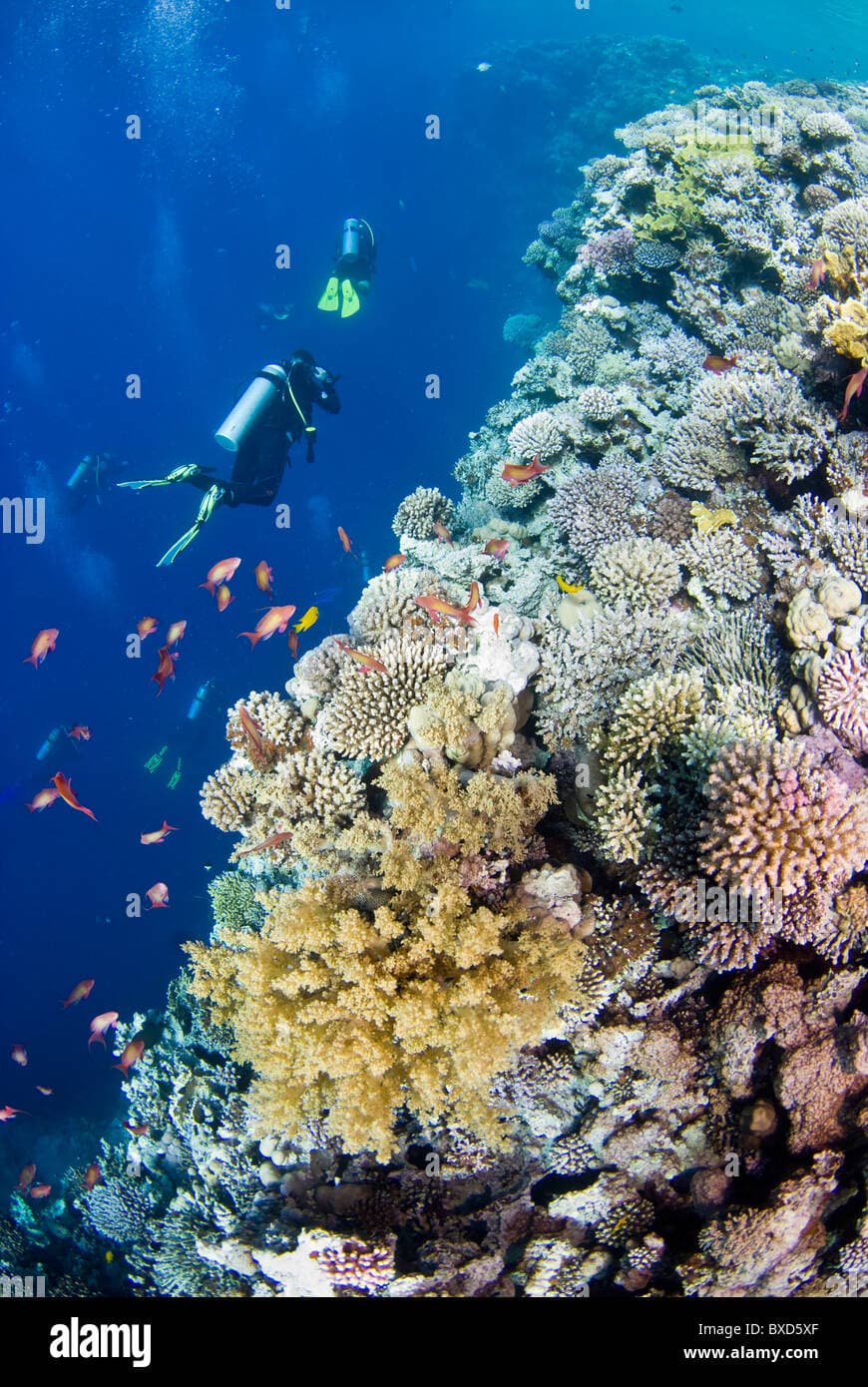
Whether you're a beginner or an experienced diver, there is always more to learn and see. Even tech divers come to Dahab for the incredible drop-offs and deep dives. The reef in Dahab drops away sharply just offshore — you're in the water and over the wall in seconds. No boat required for most sites.
Getting certified in Dahab: PADI Open Water costs roughly $200–280 USD including all dives, materials, and certification. That's among the cheapest rates for this qualification you'll find anywhere in the world with genuinely world-class conditions. Advanced Open Water runs a similar price. Several dive centers along the Lighthouse promenade are well-reviewed and long-established: Orca Dive Club, Nesima Dive Centre, and Lighthouse Dive Center are all consistently recommended.
Best dive sites:
- Lighthouse Reef — Right in front of the main promenade. The entry-level site where most beginners do their certification dives. Coral walls, reef fish, the occasional turtle. Walk-in entry from the beach.
- Eel Garden — Named for the garden eels that stand half-out of the sandy seafloor in vast numbers. A calm, beautiful dive. Also accessible on foot from Assalah Beach.
- The Canyon — An underwater canyon beginning shallow and dropping into a dramatic vertical crack in the reef at around 30 m. Requires Advanced certification. One of the most visually spectacular dives in Dahab.
- Islands — South of town, accessible by taxi. Consistently rated 4.9 stars. Particularly spectacular snorkeling at high tide.
- The Bells to Blue Hole drift — The classic advanced dive: enter at The Bells (a circular chimney that drops from the surface to about 26 m), drift along the wall, and exit through the Blue Hole. Regularly described as one of the finest dives in the Red Sea.
The Blue Hole: What You Actually Need to Know
The Blue Hole is a deep, natural sinkhole in the Gulf of Aqaba, just north of Dahab. It has a maximum depth of around 120 meters (390 feet) and is lined by a near-vertical reef wall.
It is also, depending on who you ask, the most dangerous dive site in the world. The Blue Hole is notorious for the number of diving fatalities which have occurred there, earning it the sobriquet "World's Most Dangerous Dive Site" and the nickname "The Diver's Cemetery". The danger is specific: an arch at 56 m depth that connects the Blue Hole to the open sea. Divers — often under-qualified, under-equipped, and overconfident — attempt it. Many have not returned. The arch requires trimix gas and technical diving certification. It is not a recreational dive.
Here is what's important: none of this applies to the vast majority of people visiting the Blue Hole.
For snorkelers, the shallow rim coral garden is excellent, safe, and spectacularly beautiful. For snorkelers, you can rent a mask and snorkel from one of the many beachside restaurants right next to the Blue Hole. There is a large jetty that serves as an ideal entry point. The shallow coral garden edging the rim of the hole contains many different species of reef fish and beautiful coral reef.
For recreational divers, the Bells to Blue Hole drift is one of the finest dives in Egypt and is well within Advanced limits at a maximum depth of around 30 m. The arch is not on your itinerary.
Getting to the Blue Hole: 10–15 minutes by taxi from central Dahab (around 80–100 EGP one way). Standard cars cannot reliably handle the track — your driver will know. Restaurants at the site serve food and drinks. There is a small entry fee at the site gate.
The Diver's Cemetery: Adjacent to the Blue Hole. A small memorial site for divers who died here. Worth a brief, quiet visit if you're there.
Freediving
Dahab is one of the great freediving towns in the world. The deep, still water of the Blue Hole and the surrounding sites provides ideal conditions for depth training. Several schools offer freediving courses from beginner (static apnea, breath-hold fundamentals) to advanced technical depth courses. If you've never tried freediving and are curious, Dahab is the right place to start — the conditions are gentle, the instructors are experienced, and a beginner course runs $150–250 USD.
Kitesurfing and Windsurfing
Dahab is world-renowned for its wind- and kite-surfing as reliable winds provide superb flat-water conditions inside Dahab's sand spit. The area has both a protected headland with direct entry to a lagoon which is ideal for beginners and some tougher open water for more experienced riders.
The Blue Lagoon (south of town) is the primary kite spot. A learn-to-kite course runs around $200–350 USD for full certification. If you already kite, bring or rent your own gear — equipment hire is widely available. The Lighthouse area also has some windsurfing.
Beyond the Water
Ras Abu Galum
A protected nature reserve 10 km north of the Blue Hole, accessible by boat (10 minutes from the Blue Hole) or a 2-hour coastal hike along a path cut between the mountains and the sea. No roads reach it. No electricity. Visitors rave about Abu Galum for breathtaking natural beauty, exceptional snorkeling, and a serene "deserted island" atmosphere.
The snorkeling here is widely considered the best in the Dahab area — the reef is in pristine condition precisely because so few people make the effort to get there. Bedouin camps offer basic accommodation for overnight stays. If you spend one night in Abu Galum, you will see the Milky Way the way it was before electricity existed.
Practical note: Bring all food and water. Prices for essentials at the site are extremely high. A water bottle can cost 50 EGP. Go prepared.
Mount Sinai and St. Catherine's Monastery
90 km inland from Dahab through the desert. Mount Sinai (2,285 m) is where tradition holds that Moses received the Ten Commandments. The summit hike takes 2–3 hours at night (most visitors start at midnight to reach the top for sunrise). The trail is accessible by camel for the lower portion. The descent reveals St. Catherine's Monastery — one of the oldest continuously inhabited Christian monasteries in the world, dating to the 6th century CE.
This is a full day and overnight trip from Dahab. Most guesthouses can arrange a minibus departure. Bring warm layers — the summit at dawn is genuinely cold even in summer.
Desert Jeep and Camel Safaris
The Sinai interior behind Dahab is extraordinary — layered red and ochre rock wadis, Bedouin villages, and landscapes that look like a different planet. Half-day and full-day jeep safaris into the mountains can be arranged through almost any guesthouse or the tour operators along the main promenade. Ask specifically for a guide from a local Bedouin family — the routes and commentary are far better than generic tourism-packaged alternatives.
Yoga and Wellness
With Dahab being a popular spot for digital nomads and freedivers, there is a strong yoga community here. Multiple studios operate along the promenade and around Assalah. Drop-in classes are widely available for $5–12 USD. Several retreat operators run multi-day yoga and freediving combination programs.
Where to Stay
Budget
Dahab's hostel and guesthouse scene is genuinely good. Dormitory beds at Rafiki Oasis (consistently top-rated on Hostelworld, with pool access) start around $7–10 USD per night. Wanas Hostel near the promenade is well-placed for divers and solo travelers. Most budget places include breakfast, have air conditioning, and offer dive center connections.
For private rooms on a budget, the Assalah Beach area has numerous small guesthouses with sea views for $20–40 USD per night.
Mid-Range
Several solid mid-range hotels line the Lighthouse and Mashraba areas in the $50–100 USD range — private beach or pool access, clean modern rooms, breakfast included. The Swiss Inn Resort Dahab is a reliable choice for couples or families wanting a proper resort feel without Sharm el-Sheikh prices.
For Digital Nomads and Long Stays
Monthly rentals in Dahab are notably cheap compared to anywhere comparable in the world. A furnished apartment with sea views runs $300–600 USD per month. The Assalah area has the most Airbnb inventory. Wi-Fi quality is the variable to check — ask specifically before booking, as hotel broadband quality varies considerably.
Food and the Promenade
Dahab's main promenade and Mashraba are the best areas for restaurants and bars, though the town has places to eat further out as well.
The promenade restaurants all follow a similar format: cushion-seat low tables facing the water, long menus of Egyptian staples and backpacker standards (hummus, grilled fish, pasta), mint tea and fresh juice available all day, shisha in the evenings. Quality varies but the setting is universally good. General rule: the restaurants slightly off the main tourist strip serve better food at lower prices.
What to eat:
- Grilled fish from any of the promenade restaurants — the Red Sea seafood is legitimately excellent. Ask what's fresh that day.
- Ful and ta'ameya in the morning from the breakfast stalls on the back streets — the Egyptian equivalent of a full breakfast for 30 EGP
- Fresh juice from the fruit stalls near the Lighthouse area — mango, guava, strawberry, mixed combinations
- Bedouin tea (heavily sweetened black tea with herbs, sometimes mint, sometimes sage) — available everywhere, a staple of every waterfront café session
Alcohol is available in Dahab, mostly at hotel bars and some promenade restaurants. It's more visible here than elsewhere in Egypt, though Dahab is still a Muslim-majority town — drink with the usual cultural awareness.
Practical Notes
Best time to visit: Spring (March–May) and autumn (September–November) offer the best balance of temperature, visibility, and calm seas. Summer (June–August) is possible but temperatures regularly exceed 40°C on land and the water can feel like a warm bath. Winter (December–February) is the coolest and quietest period — water temperature drops to around 21°C and you'll want a wetsuit.
How long to stay: Four nights minimum to get your bearings and actually decompress. A week is better. Three weeks is when Dahab starts to feel like home and you begin to understand why some people never leave.
Water safety: The Red Sea is warm, clear, and generally calm in Dahab. It is not forgiving if you ignore the conditions. Currents can be strong at certain sites. Always check with a local dive center about current conditions, especially at the Canyon and Blue Hole. Never dive beyond your certification level. The Blue Hole's arch has claimed the lives of experienced divers who ignored this rule.
Cultural notes: Dahab is the most relaxed and liberal part of Egypt. Be respectful and continue to observe religious norms, but overall Dahab is not strict regarding attire and alcohol. That said, swimwear belongs at the beach and in the water — cover up when walking through the market or the residential streets away from the promenade.
Money: ATMs are available in central Dahab but stock up in Cairo or Sharm if you're heading to remote sites like Abu Galum. Most dive centers, larger restaurants, and mid-range hotels accept cards; smaller cafés and market stalls are cash only.
Getting around locally: Dahab is walkable between the main neighborhoods during cooler months. For the Blue Hole, Islands, or Blue Lagoon, take a local pickup taxi (agree price first — around 80–150 EGP depending on distance). Renting a bicycle works well for the flat central promenade area.
The Honest Summary
Dahab is not polished. The streets aren't always clean. The infrastructure is patchy. The Wi-Fi will fail you at the worst moment. And none of that matters once you're lying on a cushion watching the light change over the water at 5 PM with a glass of fresh mango juice and no plans for the next three hours.
Egypt is relentless. Cairo is relentless. The pharaonic circuit is relentless. Dahab is the place where the country finally exhales — where the mountains meet the sea in the most dramatic way possible, and where the people who've ended up here have almost universally decided, consciously or not, that slow is better.
Come for the diving. Stay for everything else.
EgyptBound exclusive
Ready to explore?
Book your flights and hotels through our verified local partners.